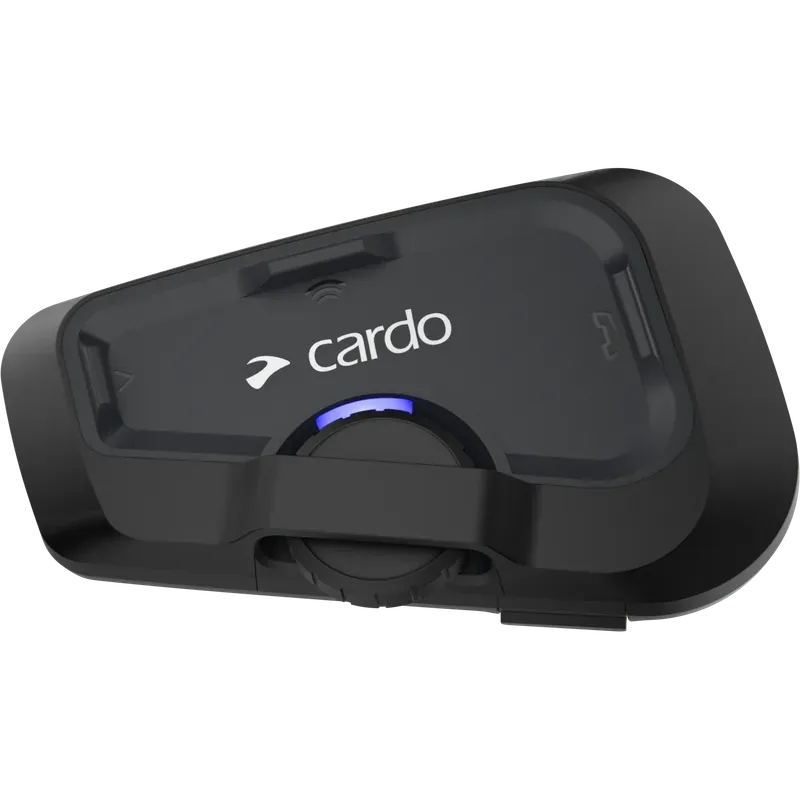
Our pick for small groups
Cardo Freecom 4X
$269.95List price
Up to 4 riders over Bluetooth, JBL speakers, Cardo's Natural Voice commands and an IP67 rating, in a light 37 g unit.
- Riders
- 4
- Claimed range
- 1,200m
- Claimed battery
- 13hrs
Check price at
Retailer links on this site may be affiliate links (none carries an affiliate ID yet). Affiliate disclosure
Our picks
Editorial analysis from manufacturer specifications and our price data. We have not tested these units on open-face helmets ourselves. Before you buy, check that the kit includes a boom microphone.
Our pick for small groups
List price
Up to 4 riders over Bluetooth, JBL speakers, Cardo's Natural Voice commands and an IP67 rating, in a light 37 g unit.
Check price at
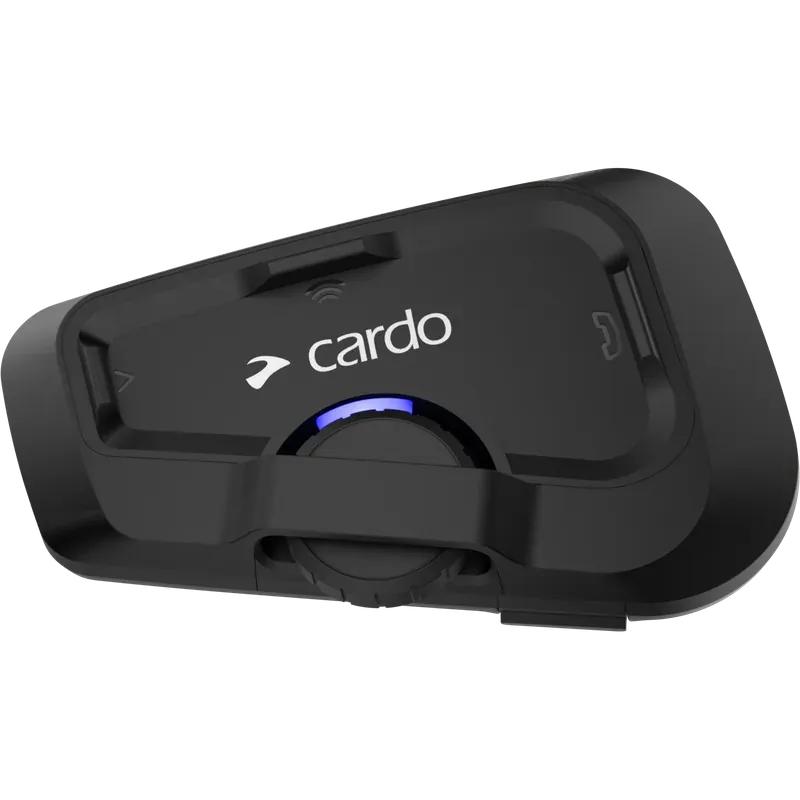
Our pick for rider and pillion
Price checked November 2026
Made for two riders: JBL speakers, IP67 and a claimed 800 m range. Two riders maximum.
Check price at
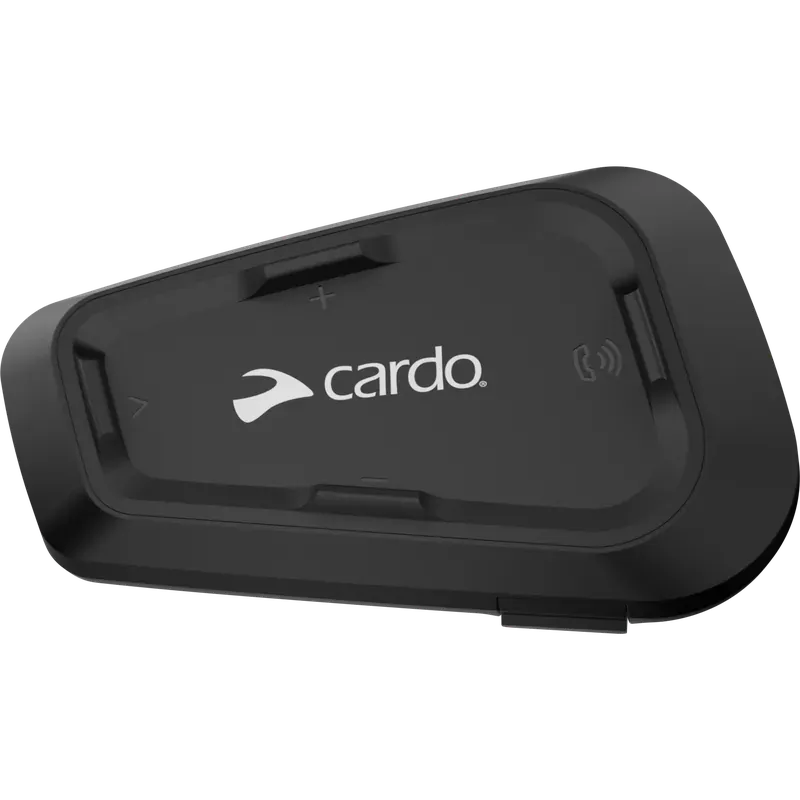
Our budget pick
Price checked November 2026
Cardo's lower-priced two-rider unit at 35 g, rated IP67. For solo commuters and occasional two-up riding.
Check price at
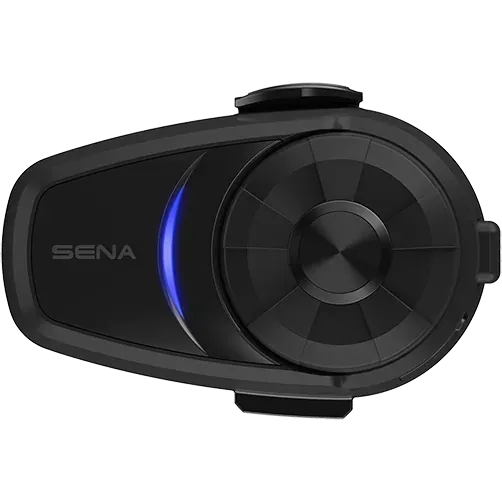
Our Bluetooth all-rounder
List price
Up to 4 riders with a claimed 1,600 m range, and Sena's Universal Intercom for pairing with other brands over Bluetooth. No official IP rating.
Check price at
Our budget-brand pick for groups
List price
Up to 8 riders on paper, a claimed 2,000 m and IP65, for little money. Less published information on support and firmware.
Check price at
| Model | Price | Intercom | Claimed range | Claimed battery | Waterproofing | Weight |
|---|---|---|---|---|---|---|
| Cardo Freecom 4X | $269.95List price | Bluetooth onlyUp to 4 riders | 1,200 m | 13 hrsclaimed | IP67 | 37 g |
| Cardo Freecom 2X | $229.46RevZilla. Price checked November 2026 | Bluetooth onlyUp to 2 riders | 800 m | 13 hrsclaimed | IP67 | 37 g |
| Cardo Spirit HD | $161.96RevZilla. Price checked November 2026 | Bluetooth onlyUp to 2 riders | 600 m | 13 hrsclaimed | IP67 | 35 g |
| Sena 10S | $239List price | Bluetooth onlyUp to 4 riders | 1,600 m | 13 hrsclaimed | No official rating | 58 g |
| Fodsports M1-S Pro | $69.99List price | Bluetooth onlyUp to 8 riders | 2,000 m | 20 hrsclaimed | IP65 | n/a |
Ranges and battery times are manufacturer claims. Prices are retailer-checked where a date is given, otherwise list prices.
An open-face or jet helmet changes three things for an intercom.
The microphone has nothing to hide behind. In a full-face helmet a small wired mic sits inside the chin bar, out of the wind. An open-face helmet has no chin bar, so the mic has to come to your mouth on an arm: a boom microphone. It sits in the wind, which is why it comes with a foam cover.
Wind reaches the mic and your ears directly. Expect more wind noise at speed than in a full-face helmet. Microphone placement and the foam cover do most of the work in keeping your voice clear to the other riders.
There is less room for the speakers. Open-face shells often have shallower ear pockets than full-face helmets. Speakers that sit flat in a full-face helmet can press on your ears in a jet helmet, so plan time to place them.
Place the mic close to the corner of your mouth, with the foam cover on. Too close and the other riders hear your breathing; too far and wind noise takes over. Test it at low speed on a quiet road with your riding partner listening before you join traffic, and adjust in small steps.
Intercom cradles attach in one of two ways: a clamp that slides between the shell and the liner, or an adhesive plate. Check which your kit includes. A clamp can be moved to another helmet; an adhesive plate is permanent. On an open-face helmet, check that the clamp has room at the edge of the shell before you order. Read your helmet maker’s guidance before attaching anything to the shell.
Wear the helmet with the speakers in place and note any pressure points. Move the speakers until they sit over your ear canals without pressing; small changes make a big difference in a shallow ear pocket. Do this at home, not at the side of the road.
Charge the unit fully, pair it with your phone and your riding partner, and set the volume and any voice commands at home. Then ride a short loop and listen for wind noise before a longer trip.
FAQ
The unit is the same; the setup is harder. Half helmets leave even less room around the ear for the speakers and nothing in front of the mouth, so a boom microphone is the only practical choice. Expect more wind noise than in a full-face helmet.
Yes, clip-on units are not made for one helmet type. What changes is the microphone: a wired mic sits inside the chin bar of a full-face helmet, while an open-face helmet needs a boom mic. Where the maker sells a second helmet kit, you can fit one to each helmet and move only the control unit.
For open-face helmets, boom. A wired microphone relies on the chin bar to hold it near your mouth, and without one it sits exposed in the wind. A boom microphone puts the mic on an arm in front of your mouth, inside a foam wind cover.
More than in a full-face helmet, and it rises with speed. A well-placed boom mic with its foam cover keeps your voice intelligible to others; what you hear depends on the helmet and on speaker placement. We have not measured wind noise ourselves, so we give no figures.
Not as a separate category. Treat a three-quarter helmet like an open-face helmet: boom microphone, clamp mount, and time spent placing the speakers.